
Pinterest strategy: I finally figured out my content plan
For almost two weeks, I kept circling the same question: how I approach my social media planning and distribution. I'm genuinely bad at it, and I suck at planning social media.
For years, I outsourced this entire bracket: the images, the copy, the descriptions, all of it, to someone else.
I finally landed on an answer, mostly because I stopped trying to solve everything at once. I had this idea of launching a full multi-platform system in one go, and once I sat with it, I realized that was the wrong move.
Pinterest is my home base. Everything else, like LinkedIn, Medium, Substack, and Instagram, is secondary. So instead of building five systems at the same time, I decided to get Pinterest right first, then add channels once that flow actually works.
Right now my Pinterest profile is a mess.
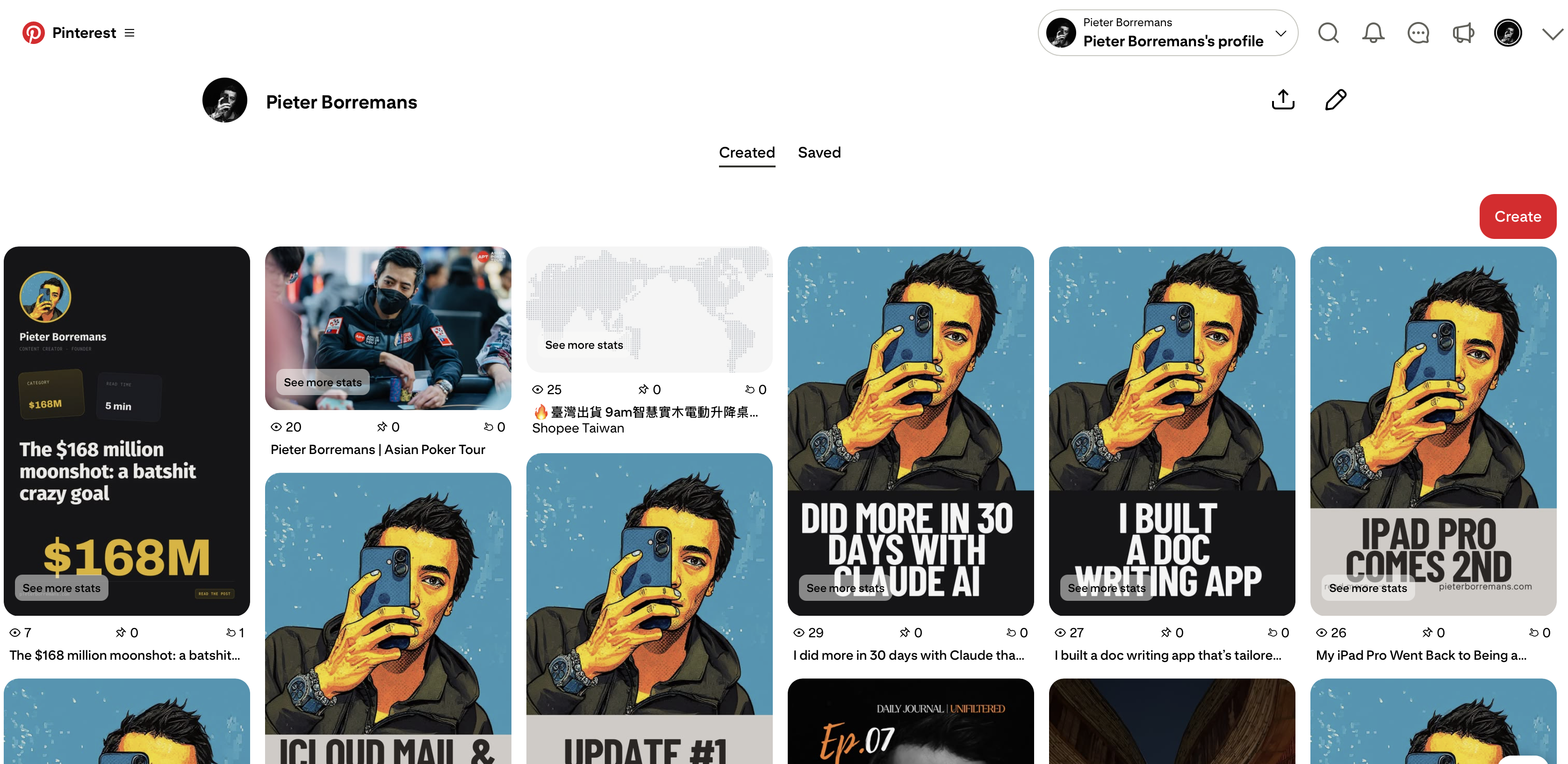
That's not new-user confusion, though. I ran Pinterest before, back when I had an e-commerce store, and it worked. Thousands of visitors and real conversions every month, mostly through a combination of Pinterest and Tailwind. But as you can see, it's a bit all over the place.
So I did what I do with most decisions these days: I ran it through AI agents to check if the old playbook still applied. Claude is where most of my work happens, but for this specific thing- checking what's changed on Pinterest, crawling for updates, validating whether old tactics still hold- Gemini turned out to be the better tool.
Good thing I checked. The game has changed on Pinterest, which meant my whole approach needed to change with it.
My goals with Pinterest
The first shift was zooming out. I wasn't chasing traffic. My real goal was strengthening my overall online presence for ORM reasons, making sure that when people search for me, what they find is mine.
That meant I didn't need to post constantly. Pinning a dozen times a day is a discarded tactic anyway, same as stacking those hashtags.
So I simplified it down to a short list:
Pin once every two days, enough to keep content moving without burning out
Start with a single board: "Personal Blog | Pieter Borremans"
Build slowly, no rushing the volume
Add new category boards after three months, then repin the same content with a fresh image
That keeps everything on Pinterest new and native instead of recycled. No re-pinning the same image over and over. Just a steady stream of fresh pins feeding the algorithm the way it's built to work now.
What was blocking me?
The real block wasn't the schedule. It was the pressure I put on myself to write a clever new title, description, and piece of copy every single time. That's what stalled me for two weeks straight.
Then it clicked: that was never the goal.
The actual goal is simple:
Strengthen the story and narrative behind this blog
Build long-term authority in search engines, with Pinterest as one of the engines feeding that
Show up consistently, nothing more dramatic than that
Once I let go of the idea that every pin needs to be a small creative masterpiece, the whole thing got a lot lighter. I mean, I never even care about fancy SEO titles on my personal blog here, so why should I all of a sudden start caring about this on Pinterest?
The biggest challenges
Two weeks of thinking wasn't just about scheduling. It was three smaller problems stacked together:
Creating unique images without reinventing the format every time, documenting the effort so I could track it, and organizing and storing the images somewhere sane.
What mattered most to me was staying on brand. I want Pinterest, this blog, YouTube, all of it, to look like it comes from the same place.
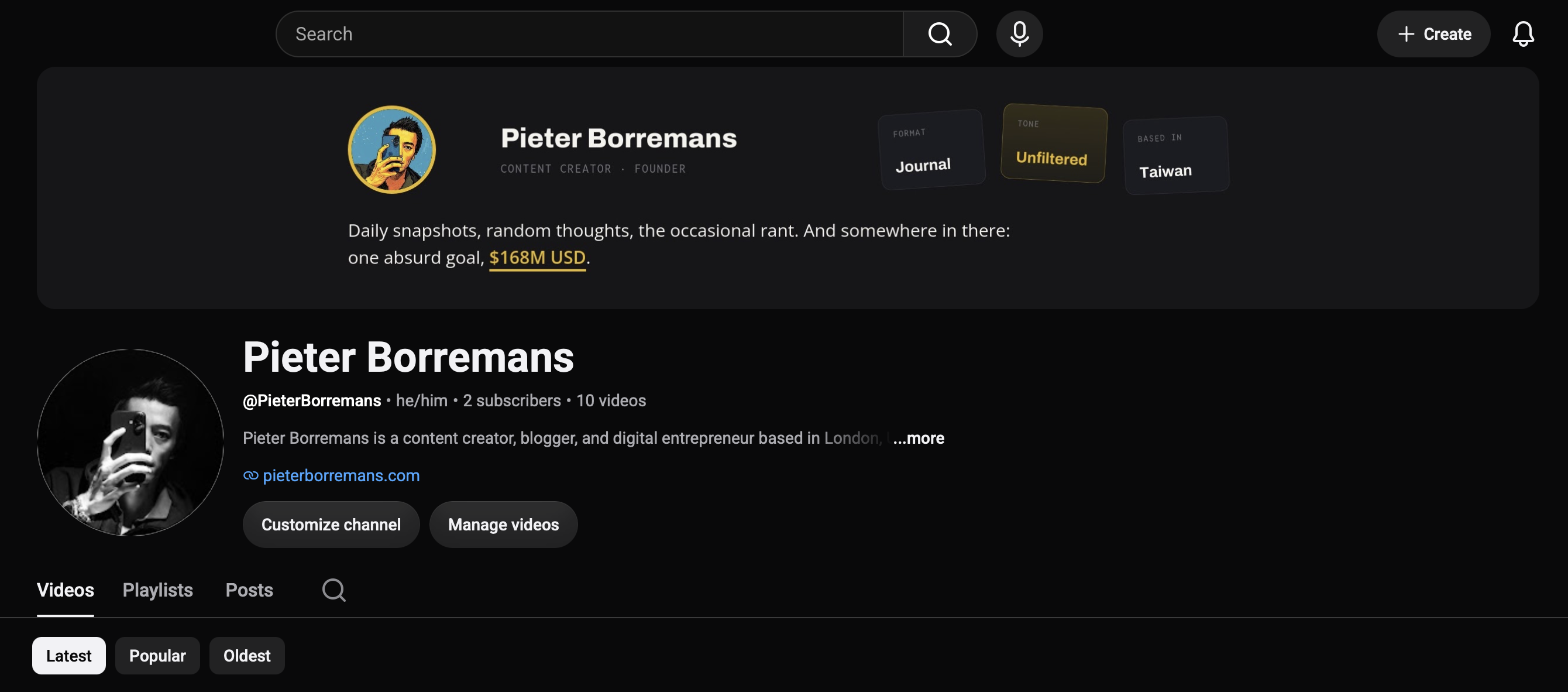
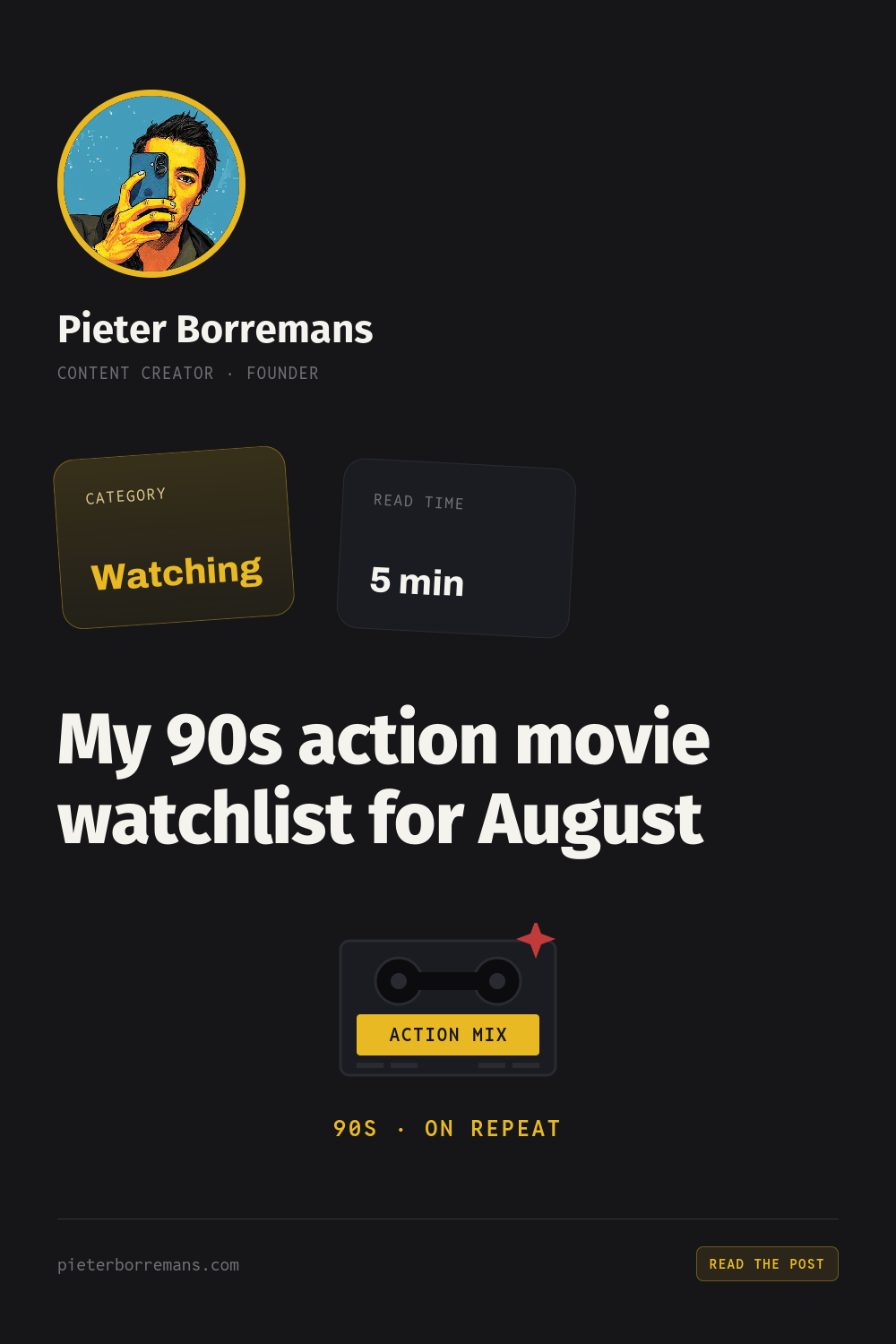
So I built a template: one base layout, locked down, with a small unique detail added per pin. Enough variation to keep each image telling its own story, without breaking the visual consistency across the whole system.
Below is an example that matches the colors, cards and the blog layout.
I built a solid setup for this inside my own dashboard, and then I did the thing I always do: I tried to perfect it instead of using it. That perfectionism was the actual bottleneck, not the tooling.
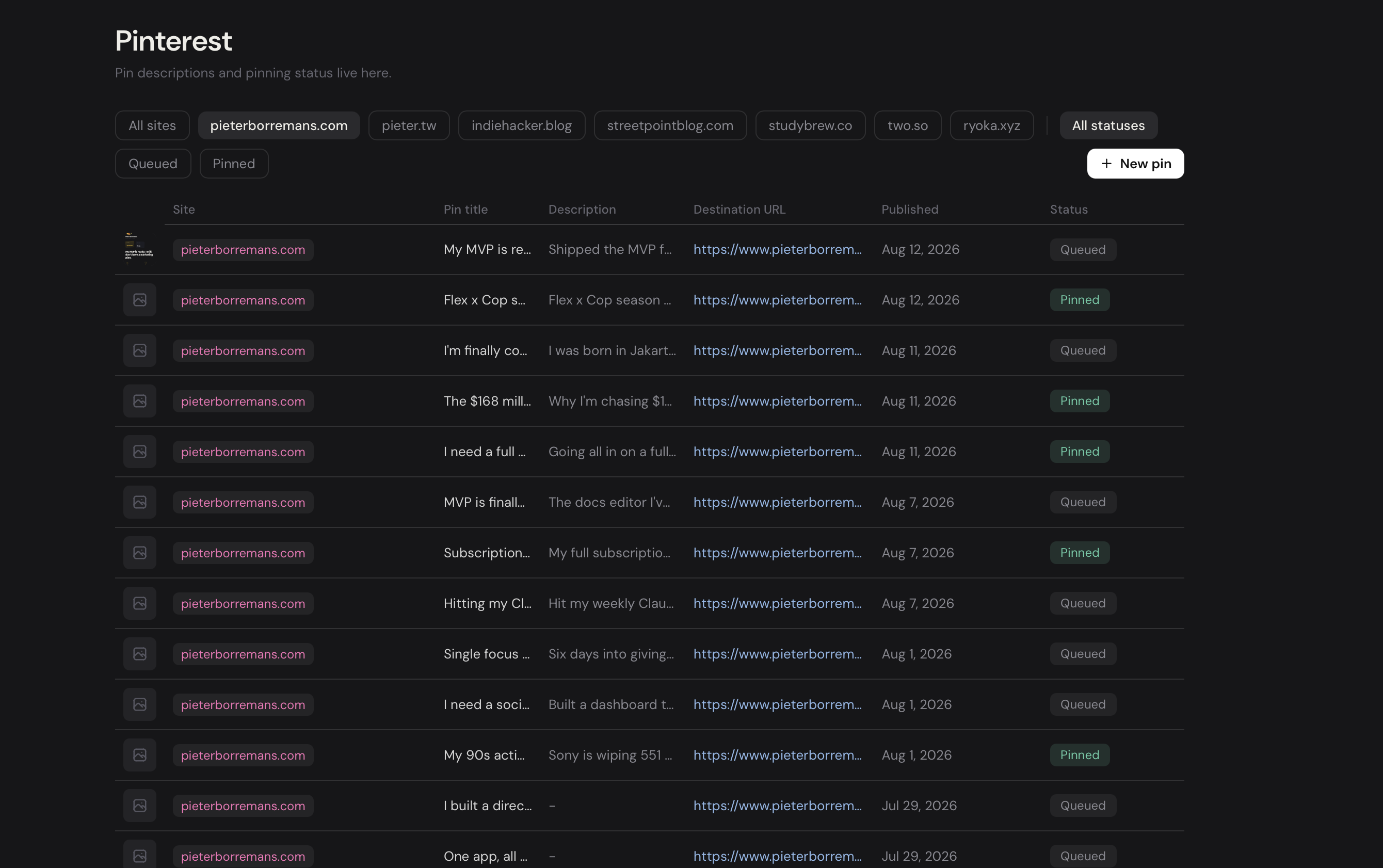
So for now I'm running a Google Sheet alongside the dashboard to track every URL. It's slower in theory since the dashboard already handles this, but right now the sheet is just faster to work with.
Once I've settled into a rhythm with this batch of content, I'll go back and tighten up the dashboard side.
The workload finally feels balanced. I don't need a fancier tool to pull this off. I need the simple system I already have, run consistently.
Tailwind vs Pinterest's native scheduler
I almost talked myself into another subscription. But Pinterest's own policies have shifted enough, and my goals have changed enough, that Tailwind doesn't really fit what I'm doing anymore.
Pinterest's free native scheduler covers what I need. I can queue ten pins at a time, which, at once every two days, works out to twenty days of content per batch. That means I sit down roughly once a month to schedule, not once a day to manage a tool.
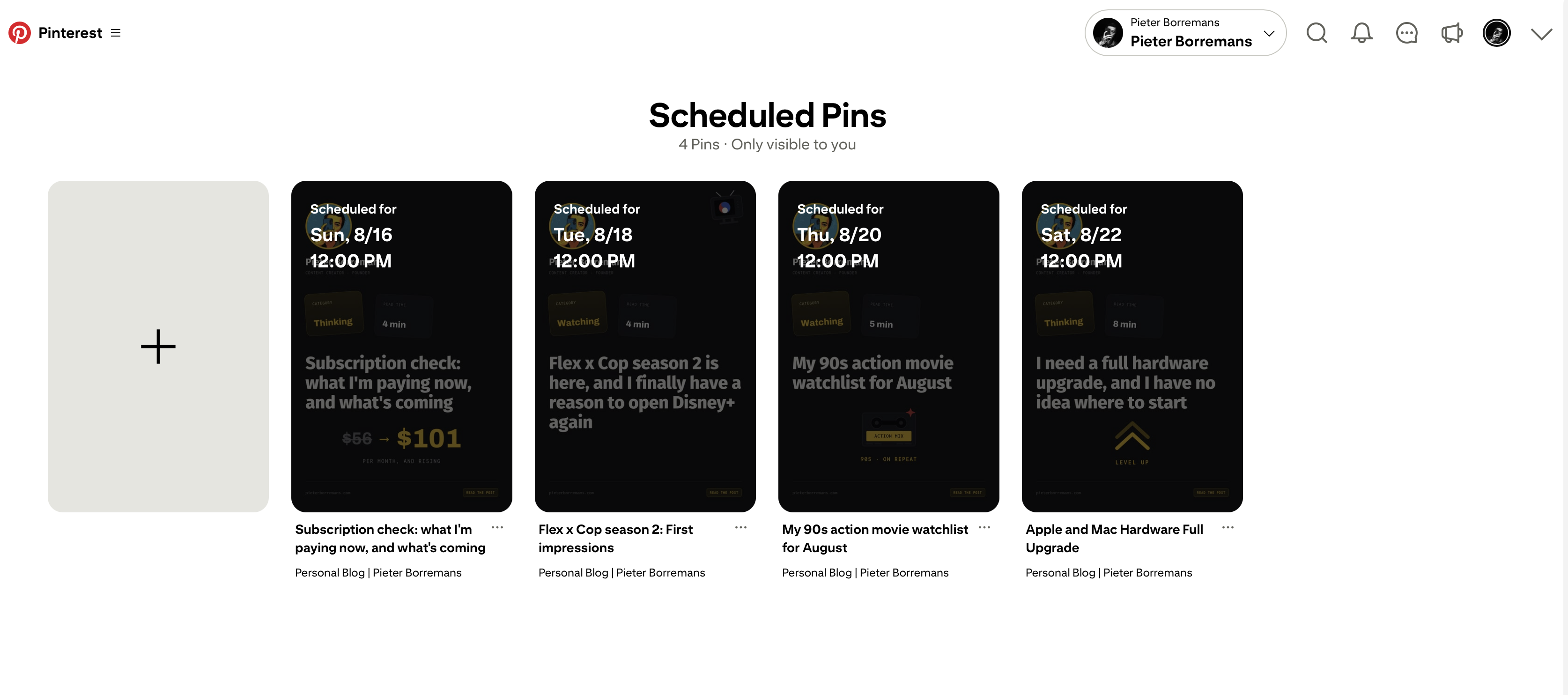
My content volume is about to grow too. My personal podcast is coming back in September, so running out of things to pin isn't really a risk anymore.
Claiming multiple domains
I'm not just publishing from this blog. Pinterest lets you claim multiple domains, so I'll eventually be pulling in content from pieter.tw, indiehacker.blog and streetpointblog.com as well.
I can split that across dedicated boards, or just increase frequency from once every two days to once a day once I've fed the algorithm enough content to work with.
None of this is about chasing a traffic spike. It's about building long-term authority around my name, so that when someone searches for it, what they find represents the work.
Pinterest is just one piece feeding that, not the whole strategy. For the first time in two weeks, the plan feels boring in the right way: simple, repeatable, nothing fancy required to keep it running.
Get new posts before anyone else
No noise, no automation sequences. Just what I'm writing, thinking about, and building, sent when there's something worth sending.
An email once in a while. Unsubscribe anytime.

Written by
Pieter Borremans
Writer·Content creator·Founder
Based in Taichung, Taiwan and London, UK, this is Pieter's personal journal and builder's blog: field notes on entrepreneurship, solo business-building, and the unfiltered reality of creating online. Alongside it, he's chasing one absurd goal in public, $168M USD in lifetime earnings, tracked live from zero.